
01
WRITEFrom a blank page
From a blank page
to a clear point of view.
Articles, launches and long-form ideas with structure, rhythm and room for your own voice.
Explore writing ↗
Write the thought. Shape the image. Set the story in motion. Hooshina turns the way you imagine into work you can use.
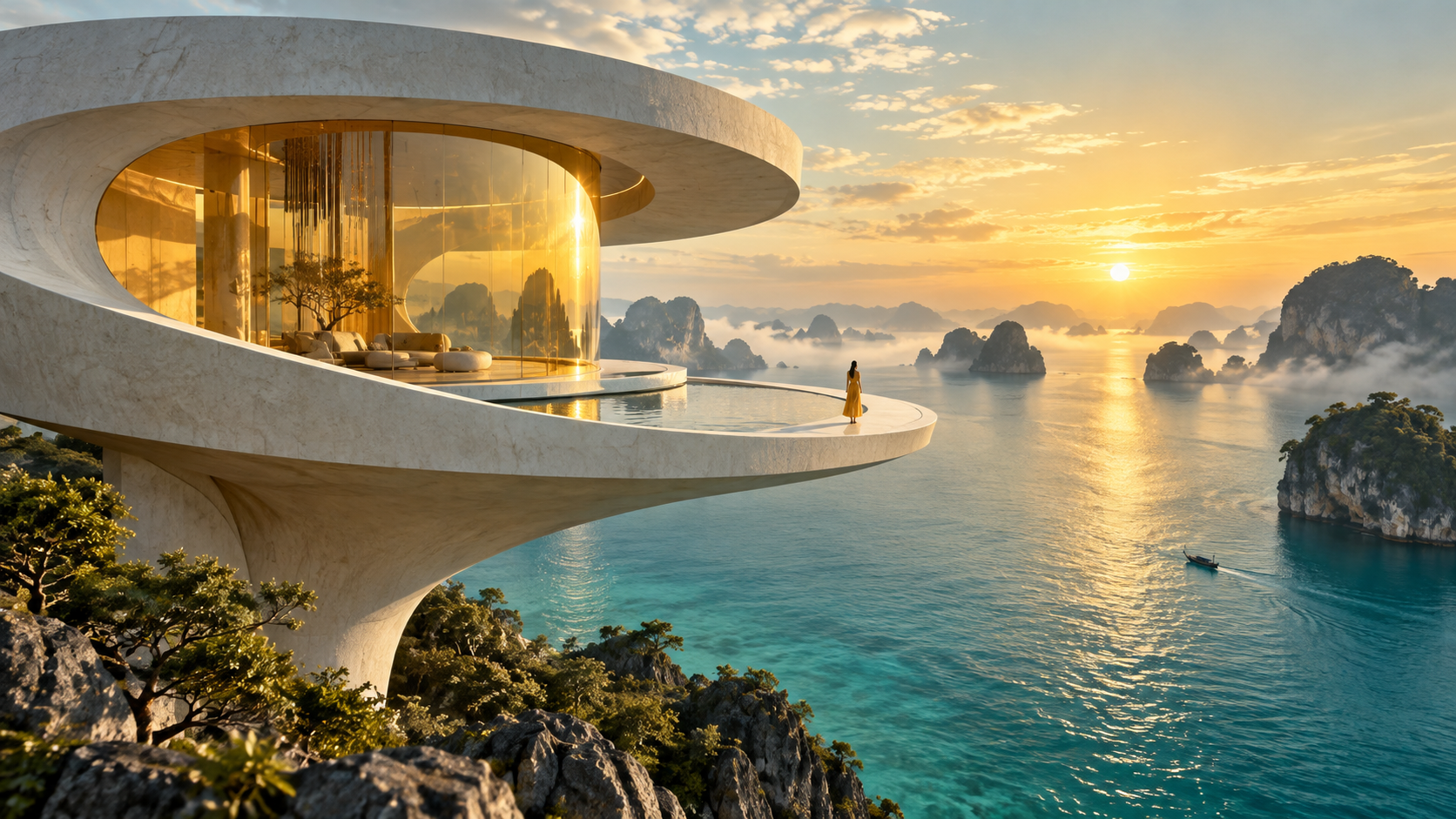
Take the quieter road. Stay for one more sunrise. Discover journeys that give more to the places you love.
Sample brand copy · made with AIAn ivory spiral pavilion above a turquoise ocean, amber glass catching the last light of the sun
Most AI tools make you adapt to the machine.
No technical maze. Just a considered path from the first sentence to the finished piece.
Move your pointer. The same idea stays connected while its shape changes.
Move between text, image and video without losing the thread. Your workspace remembers where the idea began.
One starting point. A whole new perspective.
Start with a thought.
Let Hooshina shape the possibilities.
We make room for the unexpected — quieter paths, longer conversations and places that stay with you.
Slowly orbit a translucent turquoise glass flower, with golden light moving through its petals
↗Articles, launches and long-form ideas with structure, rhythm and room for your own voice.
Explore writing ↗Move from rough description to composed visual, with help improving the prompt along the way.
Explore image creation ↗Create cinematic clips from a sentence or an image, without leaving your creative flow.
Explore video creation ↗Concept work across image, motion and text — each piece beginning with a simple description.
Write it as it comes. Hooshina helps shape the direction before anything is generated.
Refine format, mood and output without confronting a wall of technical settings.
Your finished text, image or video stays organized and ready to use.
No recurring subscription. No expiry. Add credit when you need it, see the cost before you create, and stay in control.
Create your account ↗Everything you need before making the first thing.
No. Describe the outcome in your own words. Hooshina can rewrite the prompt and guide you toward a clearer result.
No subscription is required. Add credit when you need it and only pay for the work you create.
The current workspace brings together long-form text, high-quality images and generated video in one account.
No. Purchased credit remains available in your account until you use it.
 Your next idea is already moving.